

Introduction
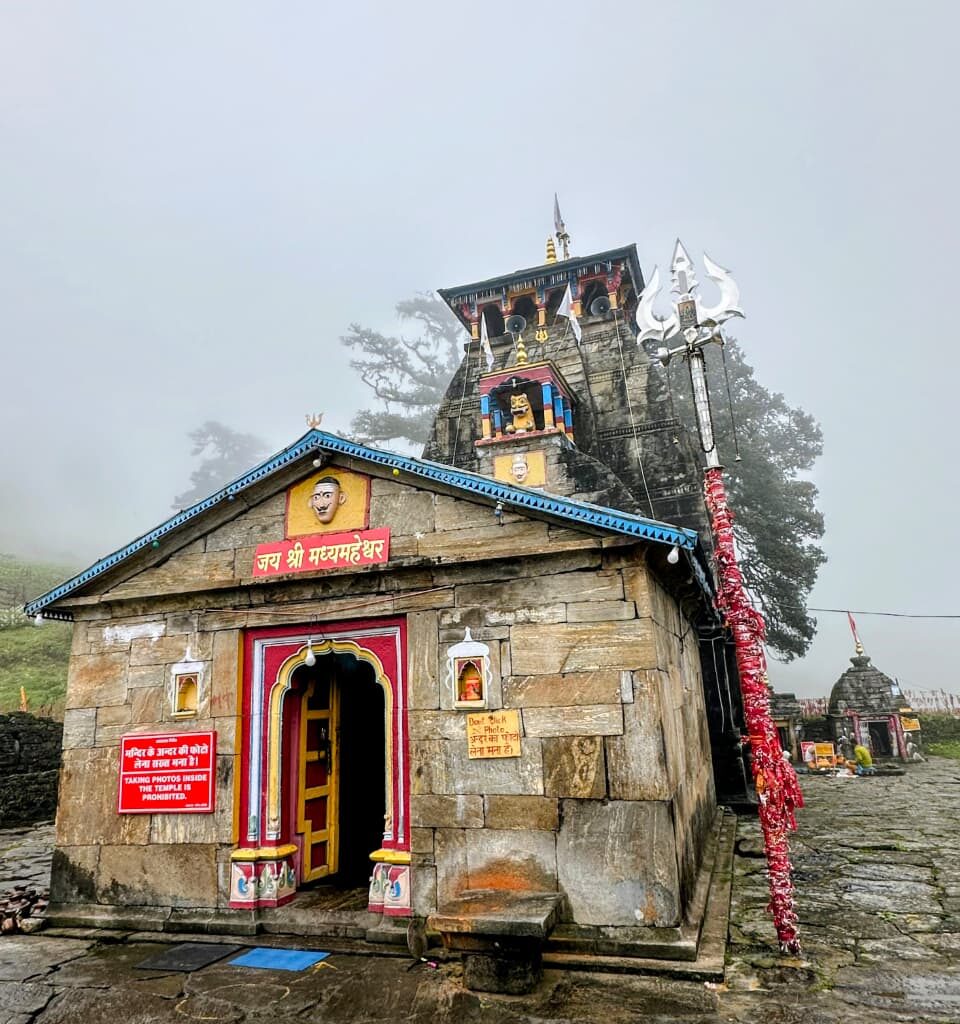
If you’re looking for a Himalayan trek that trades crowds for solitude without sacrificing spiritual depth, the Madhya Maheshwar trek deserves serious consideration. Also spelled Madhyamaheshwar or Madmaheshwar, this remote Shiva temple sits at roughly 3,497 metres in the Garhwal Himalayas and is widely regarded as the least visited — and most peaceful — of the five Panch Kedar temples. While Kedarnath draws lakhs of pilgrims every season, Madhya Maheshwar remains refreshingly untouched, offering forests, meadows, and mountain views that feel almost entirely your own.
This guide covers everything you need to plan your trip — the legend behind the temple, the trek route and distance, how to get there, the best season to visit, and practical tips for a smooth journey.
Where is Madhya Maheshwar Located?
Madhya Maheshwar temple is located in the Rudraprayag district of Uttarakhand, inside the Kedarnath Wildlife Sanctuary, at the base of the Chaukhamba massif. The nearest road-accessible village is Ransi, which lies close to Ukhimath — the winter seat for several Panch Kedar deities. From Ransi, the trail winds through Gaundhar and Bantoli villages before finally climbing to the temple itself.
The Legend Behind Madhya Maheshwar
Madhya Maheshwar’s name comes directly from Sanskrit: “Madhya” means middle, and “Maheshwar” is another name for Lord Shiva. According to the Panch Kedar legend, after the Pandavas sought Shiva’s forgiveness for the sins committed during the Kurukshetra war, Shiva evaded them by transforming into a bull and diving into the earth. His body is believed to have reappeared at five different locations in the Garhwal Himalayas — together forming the Panch Kedar.
At this particular site, it is believed that the navel and middle portion (madhya) of Shiva’s divine form emerged, giving the temple its name. Locals also fondly refer to the deity as the “joyful” or “carefree” form of Shiva. The temple itself is an ancient stone structure built in traditional Himalayan style, and interestingly, the priests here are Jangama Lingayats originally from Karnataka — a unique blend of North and South Indian spiritual tradition that has continued for generations.
Just 2 km beyond the main shrine lies Budha Madhyamaheshwar (Old Madhyamaheshwar), a smaller temple by a scenic alpine lake, with sweeping views of the Chaukhamba and Neelkanth peaks.
Madhya Maheshwar Trek: Route and Distance
Unlike the shorter Tungnath trek, this is a genuine multi-day Himalayan expedition, which is part of what keeps it so uncrowded.
Starting Point: Ransi village (accessible by road from Ukhimath) Total Trek Distance: Approximately 19 to 20 km one way from Ransi to the temple (round trip closer to 32–36 km depending on the exact route taken) Trek Duration: 4 to 5 days including travel, acclimatization, and return Difficulty Level: Moderate — manageable for reasonably fit beginners, but longer and more demanding than Tungnath or Kedarnath
A typical itinerary looks something like this:
- Day 1: Drive from Rishikesh or Haridwar to Ukhimath, then onward to Ransi village. Overnight stay at Ransi.
- Day 2: Trek from Ransi to Gaundhar village via Bantoli, passing through dense forest and along the river. This is usually the longest walking day.
- Day 3: Trek from Gaundhar to the Madhya Maheshwar temple, climbing steadily through meadows and alpine terrain to reach the shrine.
- Day 4: Explore the temple and, if energy allows, extend to Budha Madhyamaheshwar for the best mountain views on the route. Begin the descent back toward Gaundhar or Ransi.
- Day 5: Complete the descent to Ransi and drive back toward Ukhimath.
The trail passes through thick coniferous and rhododendron forest, quaint mountain villages, wooden bridges over gushing streams, waterfalls, and finally opens into high-altitude meadows as you approach the temple. It’s this variety of terrain — forest, river, village, and alpine meadow — that makes the walk to Madhya Maheshwar one of the most scenic temple treks in the entire Garhwal region.
How to Reach Madhya Maheshwar
By Air: The nearest airport is Jolly Grant Airport in Dehradun, roughly 210–235 km from Ukhimath. From there, hire a taxi toward Rudraprayag and Ukhimath.
By Rail: Rishikesh Railway Station is the most convenient railhead, about 180–190 km from Ukhimath. Haridwar Junction, roughly 200 km away, is another option with better long-distance rail connectivity.
By Road: From Delhi, the full drive to Ransi via Haridwar, Rishikesh, Devprayag, Srinagar, Rudraprayag, and Ukhimath covers roughly 450 km and typically takes a full day. Regular buses run from Delhi’s ISBT to Rudraprayag, from where shared taxis are available onward to Ukhimath and Ransi.
Once you reach Ransi, the road ends — everything beyond is on foot. There are no vehicles, cable cars, or shortcuts to the temple, which is exactly what preserves its remote, untouched character.
Best Time to Visit Madhya Maheshwar
- May to June: Considered the best window, with clear skies, blooming rhododendrons, and pleasant daytime temperatures. The temple typically opens in early May after snow clearance, following a traditional ceremony at Ukhimath’s Omkareshwar temple on Baisakhi.
- July to August: Monsoon rains make the trail slippery and prone to landslides — best avoided unless you’re an experienced monsoon trekker.
- September to November: A close second favorite, with crisp air, golden meadows, and excellent visibility of the Chaukhamba range. Crowds are minimal even by Madhya Maheshwar’s already-quiet standards.
- December to April: Heavy snowfall closes the temple entirely. The deity is ceremonially moved down to Ukhimath, where it remains until the following spring.
Since opening and closing dates shift slightly each year based on the lunar calendar, it’s worth confirming the current year’s schedule before finalizing your travel dates.
What to Pack
Given the length of this trek and its remoteness, packing thoughtfully matters more here than on shorter Himalayan walks:
- Broken-in trekking shoes with strong grip and ankle support
- Layered clothing — thermal base layer, fleece, and a waterproof/windproof outer shell
- A warm cap, gloves, and sunglasses for high-altitude sun exposure
- A refillable water bottle (natural spring water is available and safe along much of the route)
- High-energy snacks, dry fruits, and electrolyte supplements
- A basic first-aid kit, personal medication, and altitude sickness precautions
- A high-capacity power bank — electricity is largely solar-powered in the villages en route
- A good sleeping bag if you’re camping rather than using homestays
- Cash — ATMs and digital payment options disappear well before Ukhimath
Connectivity and Facilities Along the Route
Because Madhya Maheshwar remains one of the less-developed Panch Kedar routes, don’t expect much in the way of modern conveniences. Mobile network coverage — mainly BSNL and Jio — is patchy at best and disappears completely in stretches. Accommodation along the way is simple: homestays and small guesthouses in Ransi and Gaundhar, with basic meals like dal-bhaat and mandua ki roti (finger millet flatbread). Treat the trek as something of a digital detox — it’s part of what makes the experience feel genuinely removed from everyday life.
Nearby Places Worth Visiting
Budha Madhyamaheshwar: Roughly 2 km beyond the main temple, this smaller shrine by an alpine lake offers arguably the best panoramic views of Chaukhamba and Neelkanth on the entire route.
Ukhimath: Home to the Omkareshwar temple, where several Panch Kedar deities are moved during the winter closure. Worth a visit for its own historical and religious significance.
Gaundhar and Bantoli: These small villages along the trail are worth slowing down in — quiet, scenic, and a good place to interact with local mountain life away from typical tourist circuits.
Omkar Ratneswar Mahadev Temple: Located on the Ukhimath–Gopeshwar road, roughly 25–30 km from Madhya Maheshwar, this is a historic Shiva temple often combined with a broader Panch Kedar itinerary.
Tips for a Smooth Trip
- Build in acclimatization days. Given the trek’s length and altitude gain, rushing increases the risk of altitude sickness — plan at least one buffer day.
- Start each walking day early. Mountain weather tends to turn by early afternoon, so aim to reach each night’s stop before then.
- Carry sufficient cash. Beyond Ukhimath, digital payments are essentially unavailable.
- Respect the wildlife sanctuary. The trail runs through the Kedarnath Wildlife Sanctuary, home to species like the Himalayan musk deer — stick to marked trails and avoid littering.
- Confirm temple opening dates. If you’re visiting close to the start or end of the season, verify the current year’s dates before you travel.
- Consider a local guide. Given the trek’s length, remoteness, and limited signage in places, a local guide adds both safety and context.
Why Madhya Maheshwar Is Worth the Extra Effort
Compared to the shorter, more accessible Panch Kedar treks, Madhya Maheshwar demands more time, more stamina, and more planning. That’s precisely its appeal. Where other Himalayan pilgrimage routes have grown crowded and commercialized, this one still feels like a genuine journey — days of walking through forest, riverside villages, and meadows before the temple finally comes into view, framed by the Chaukhamba peaks. For travelers who want their Himalayan pilgrimage to feel unhurried and untouched, few routes in Uttarakhand deliver that quite like Madhya Maheshwar.
Conclusion
The Madhya Maheshwar trek isn’t the easiest of the Panch Kedar routes, nor the most famous — but that’s exactly what makes it special. Between the mythology, the remote mountain villages, the alpine meadows, and the near-total absence of crowds, it offers a Himalayan pilgrimage experience that feels increasingly rare. With the right season, proper preparation, and a realistic itinerary, a trip to Madhya Maheshwar can easily become one of the most memorable treks of your time in the Garhwal Himalayas.
If you’re planning a trip to Madhya Maheshwar or the wider Panch Kedar circuit, reach out to us to help plan a well-organized itinerary suited to your travel dates and fitness level.