

Planning a visit to Mahakaleshwar Temple, Ujjain? Here’s your complete guide — history, darshan timings, Bhasma Aarti, how to reach, and travel tips.
Introduction
Among the twelve sacred Jyotirlingas of Lord Shiva scattered across India, few carry the mystique and spiritual pull of Mahakaleshwar Temple in Ujjain, Madhya Pradesh. Also referred to as Mahakal or the Mahakaleshwar Jyotirlinga, this ancient shrine is unlike any other Shiva temple in the country — it is the only Jyotirlinga where the deity faces south (Dakshinamukhi), and it is home to the famous Bhasma Aarti, a ritual so distinctive that it draws devotees from across India and beyond.
Whether you’re planning a dedicated pilgrimage or simply want to understand what makes Mahakaleshwar such a revered destination, this guide covers everything — the temple’s history and mythology, darshan timings, the Bhasma Aarti ritual, how to reach Ujjain, the best time to visit, and practical tips for a smooth trip.
Where is Mahakaleshwar Temple Located?
Mahakaleshwar Temple stands in the heart of Ujjain, one of India’s oldest and most sacred cities, historically known as Avantika. The temple sits beside the Rudra Sagar Lake and is one of the seven Moksha-giving Puri cities in Hindu tradition, alongside Varanasi, Haridwar, and Mathura. Ujjain itself is also famous for hosting the Kumbh Mela (known locally as Simhastha) once every twelve years, which draws millions of pilgrims to the banks of the Shipra River.
The Legend and History of Mahakaleshwar
According to Puranic legend, a demon named Dushan once terrorized the people of Avantika (present-day Ujjain). The devotees prayed fervently to Lord Shiva for protection, and Shiva manifested as Mahakal to destroy the demon and safeguard the city. Since then, Mahakaleshwar has been worshipped as the protector of Ujjain, and the Shivling here is believed to be Swayambhu — self-manifested rather than ritually installed, drawing its spiritual power directly from within itself.
The temple’s history stretches back thousands of years and is deeply woven into Hindu scripture and regional history. The original temple complex was destroyed during the invasion of Sultan Shams-ud-din Iltutmish in 1234–1235, but it was later rebuilt and expanded over the centuries. During the reign of the Scindia rulers of the Gwalior state, the temple received significant patronage, and after India’s independence, its management eventually passed to a dedicated temple trust under the district administration.
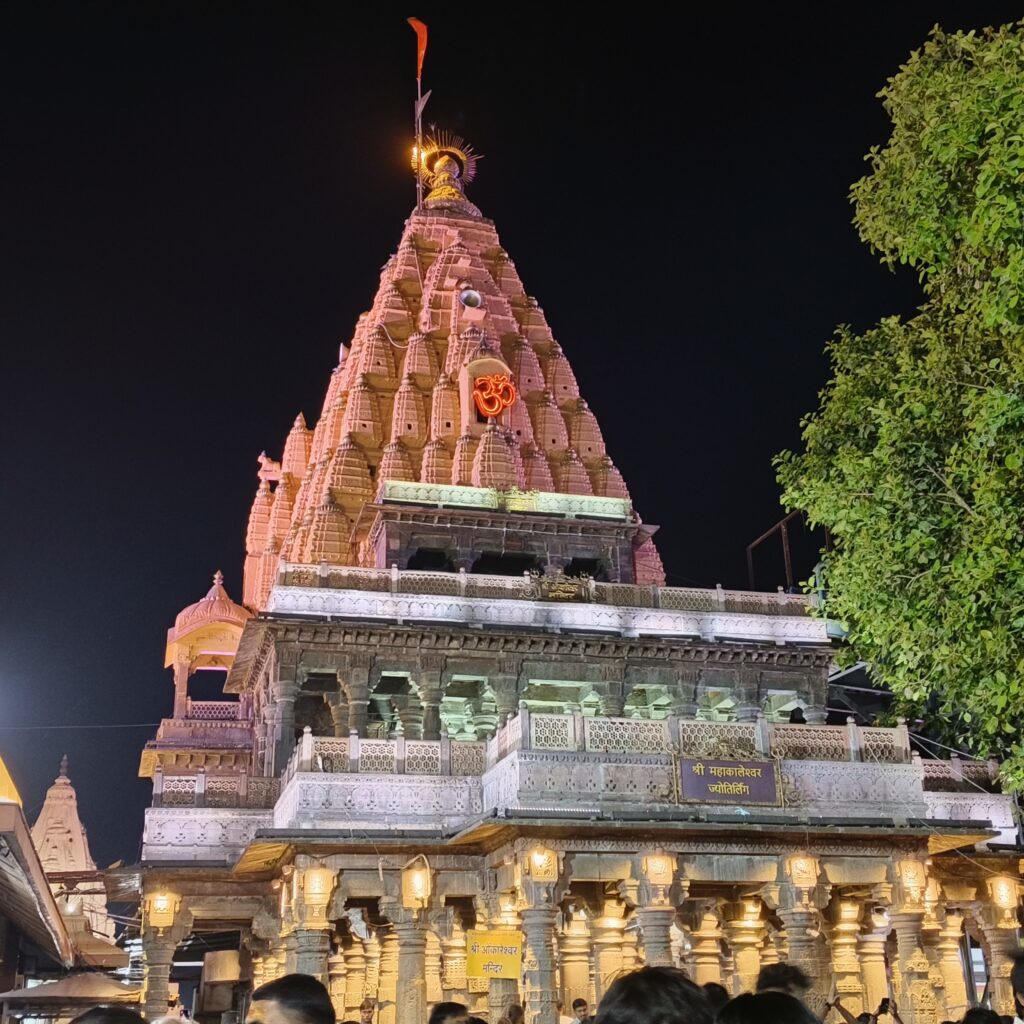
The current structure reflects a blend of Chalukya and Maratha architectural styles, and the complex spans five levels, one of which lies underground. Idols of Ganesh, Kartikeya, and Parvati are installed in the western, eastern, and northern sections of the temple respectively, surrounding the central sanctum.
What Makes Mahakaleshwar Unique
Several features set Mahakaleshwar apart from the other eleven Jyotirlingas:
South-Facing Deity: While every other Jyotirlinga faces east, the Mahakaleshwar lingam uniquely faces south — a feature considered deeply significant in Tantric and Shaiva traditions.
Bhasma Aarti: Mahakaleshwar is the only Jyotirlinga temple where the Bhasma Aarti (ash ritual) is performed daily in the early morning hours, symbolically waking Lord Shiva. Traditionally performed with sacred ash, this ritual is considered one of the most powerful and unique observances in all of Hindu worship.
Re-offerable Prasad: Unusually, the prasad offered at Mahakaleshwar can be offered again — a practice not found at any of the other Jyotirlinga temples.
Tantra Significance: The temple is also counted among the top Tantra temples of India, adding another layer of spiritual and ritual importance for certain traditions of worship.
Darshan Timings and Bhasma Aarti
Mahakaleshwar Temple generally remains open through the day, with darshan typically available from around 5:00 AM to 3:30 PM, and again from 6:00 PM to 10:00 PM, though exact hours can shift slightly around festivals or administrative decisions.
The Bhasma Aarti is conducted in the very early morning, usually between 4:00 AM and 6:00 AM, and requires advance booking, as spots are limited and demand is extremely high, especially during Shravan (Sawan) month, on Mondays, and around Mahashivratri. Devotees are strongly advised to book Bhasma Aarti passes online in advance through the official temple booking channels rather than arriving without a reservation.
Important rules to keep in mind: mobile phones, cameras, and smartwatches are not permitted inside the temple premises. Free lockers are typically available for storing these items, and belts, jackets, and bags must usually be left outside as well.
How to Reach Ujjain and Mahakaleshwar Temple
By Air: The nearest airport is Devi Ahilyabai Holkar Airport in Indore, roughly 55 km from Ujjain. From the airport, taxis and buses are readily available, and the journey typically takes 1.5 to 2 hours.
By Rail: Ujjain Junction railway station is centrally located and well connected to major cities across India, including Delhi, Mumbai, Kolkata, and Jaipur, with several direct trains available.
By Road: Ujjain has excellent road connectivity to nearby cities like Indore, Bhopal, and Ahmedabad via national highways. Regular bus services also connect Ujjain with major towns across Madhya Pradesh.
Once in Ujjain, the temple is centrally located and easily reachable by auto-rickshaw or a short taxi ride from the railway station or bus stand.
Best Time to Visit Mahakaleshwar
Mahakaleshwar Temple can technically be visited year-round, but certain periods carry particular significance:
- Shravan (Sawan) Month: Considered the most auspicious month to worship Lord Shiva, this period sees an enormous surge in devotees, along with special rituals and extended darshan arrangements.
- Mahashivratri: One of the most important festivals at the temple, drawing massive crowds for elaborate celebrations and all-night worship.
- Mondays: As the day traditionally associated with Shiva worship, Mondays see noticeably higher footfall than other weekdays.
- October to March: For travelers who prefer more comfortable weather and slightly thinner crowds outside of major festivals, these cooler months are generally more pleasant for sightseeing around Ujjain.
If your priority is a calmer, less crowded darshan experience, it’s worth avoiding Shravan month and Mahashivratri unless the festival atmosphere itself is part of what you’re seeking.
Other Sacred Sites to Visit Near Mahakaleshwar
Since Ujjain is one of Hinduism’s most significant pilgrimage cities, a visit to Mahakaleshwar can easily be combined with several other important sites:
Kal Bhairav Temple: Dedicated to a fierce form of Shiva, this temple is famous for its unusual tradition of offering liquor as prasad to the deity.
Harsiddhi Temple: One of the 51 Shakti Peethas, dedicated to the goddess Harsiddhi, located close to the Rudra Sagar Lake.
Ram Ghat: A sacred bathing ghat on the Shipra River, especially significant during the Simhastha Kumbh Mela, and a peaceful spot for an evening aarti.
Chintaman Ganesh Temple: An ancient temple dedicated to Lord Ganesh, believed to fulfill the wishes of devotees who visit with sincere devotion.
Vedh Shala (Ujjain Observatory): A historic astronomical observatory built by Maharaja Jai Singh II, reflecting Ujjain’s ancient significance as a center of astronomy and the Indian meridian.
Accommodation and Practical Tips
Ujjain offers a wide range of accommodation, from budget dharamshalas near the temple to mid-range and premium hotels across the city. Given the temple’s popularity, especially during Shravan and major festivals, booking accommodation and Bhasma Aarti passes well in advance is strongly recommended.
A few additional tips for a smooth visit:
- Book Bhasma Aarti passes online early, particularly if traveling during Shravan, Mahashivratri, or on a Monday.
- Dress modestly and traditionally — men are often required to remove shirts and wear a dhoti during the Bhasma Aarti, which is provided at the temple.
- Avoid carrying electronics into the temple, since phones and cameras are not permitted inside.
- Plan for security checks and queues, especially during peak pilgrimage season.
- Stay hydrated and start early, as the temple complex can get crowded quickly, particularly around the main aarti timings.
- Combine your visit with other Ujjain landmarks to make the most of your trip, since most major sites are within a short distance of each other.
Why Mahakaleshwar Remains One of India’s Most Revered Temples
What draws pilgrims back to Mahakaleshwar year after year isn’t just its status as a Jyotirlinga — it’s the sheer intensity of devotion visible here, especially during the pre-dawn Bhasma Aarti, when the temple fills with chanting devotees well before sunrise. Combined with Ujjain’s broader spiritual landscape — its ghats, ancient temples, and deep-rooted mythology — a visit to Mahakaleshwar offers a pilgrimage experience that feels both ancient and remarkably alive.
Conclusion
Mahakaleshwar Temple is far more than a stop on the Jyotirlinga circuit — it is one of the most spiritually significant and ritually distinctive Shiva temples in all of India. From its south-facing deity to the powerful Bhasma Aarti performed each dawn, a visit here offers pilgrims a genuinely unique window into centuries of unbroken devotion. With the right planning — advance bookings, appropriate timing, and a bit of patience for the crowds — a trip to Mahakaleshwar can easily become one of the most memorable spiritual experiences of your travels in India.
If you’re planning a pilgrimage to Mahakaleshwar or the wider Jyotirlinga circuit, reach out to us to help plan a comfortable, well-organized itinerary suited to your travel dates.